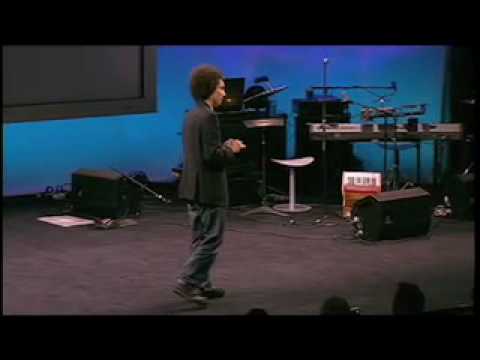
On being wrong
Summary
Unknown starts with a great story about a cross-country road trip where, for 2,000 miles, she kept seeing what she thought was a Chinese character on roadside signs. It was, of course, the symbol for a picnic area. This becomes her way into a much bigger idea: why we get trapped in the feeling of being right, even when we’re completely wrong.
She makes a sharp distinction between *realizing* you’re wrong, which feels embarrassing and dreadful, and simply *being* wrong. Being wrong, she points out, feels exactly like being right. She uses the perfect analogy of Wile E. Coyote, who keeps running over the cliff, totally fine, until the moment he looks down. That’s us, on what we think is solid ground, right before we realize our mistake.
Unknown argues we’re culturally trained to fear error. From a young age, school teaches us that getting things wrong means you’re a lazy dimwit. So we learn to be perfectionists, terrified of any sign that we might have made a mistake.
This attachment to being right isn’t just a personal quirk; it has huge consequences. It leads to catastrophic medical errors and prevents us from seeing flaws in big economic and political plans. Socially, it makes us assume that anyone who disagrees with us must be ignorant, stupid, or evil.
Ultimately, Unknown reframes this completely. She points to St. Augustine’s idea, “I err therefore I am,” suggesting our ability to get things wrong isn’t a defect but the source of our humanity and creativity. The talk ends with a plea to embrace the possibility of being wrong as the key to rediscovering a sense of wonder.
Why this talk worked
The hook
Unknown opens with a personal story about a road trip from her college days. She sets a scene: young, broke, driving the back roads of America. Then she drops the hook, a question she asked her friend: “What's up with the Chinese character I keep seeing by the side of the road?”
The story is perfectly disarming. It’s self-deprecating, relatable, and builds a little mystery. The payoff, when she reveals she’s been misinterpreting the universal sign for a picnic area, gets a huge laugh. It brilliantly establishes her central theme, our capacity for being wrong, in a way that’s charming and low-stakes. She’s not here to judge; she’s making fun of herself first.
Why it resonates
The talk gets at a feeling we all know but rarely discuss: that quiet, internal conviction that we are correct. Unknown gives this a name, calling it “this little bubble of feeling very right about everything,” and people immediately recognize themselves in it.
The real power comes from how she frames the problem. It’s not a moral failing or a lack of intelligence. Instead, she presents it as a structural feature of our minds, which she calls “error blindness,” and a product of our culture, which punishes mistakes from grade school onward. This framing is a relief. It allows the audience to examine their own stubbornness without feeling attacked.
Her distinction between *being* wrong and *realizing* you’re wrong is the core insight. The idea that being wrong feels exactly like being right is a genuine lightbulb moment. It’s a simple, profound explanation for why we cling to our beliefs and why it’s so jarring when we’re forced to confront our errors.
How it is built
Unknown’s argument is built like a classic persuasive essay, moving from a simple anecdote to a profound conclusion. The structure is tight, logical, and easy to follow.
She begins with a personal, low-stakes problem (the picnic sign) to introduce the idea. Then she defines the internal experience of being wrong, using the brilliant Wile E. Coyote metaphor to explain the concept of “error blindness.” This gives the audience a visual anchor for the abstract idea.
Next, she broadens the scope, showing how this internal feeling, combined with cultural pressure, leads to huge external consequences. She escalates the stakes from personal embarrassment to wrong-site surgery, environmental disasters, and global economic collapse. This section makes the problem feel urgent and important.
Finally, she offers the turn, or the solution. She reframes wrongness not as a failure to be eliminated but as a fundamental part of being human, citing St. Augustine’s “I err therefore I am.” This becomes the payoff. The goal isn't to be right all the time, but to cultivate the humility to say, “Maybe I’m wrong.” It’s a powerful and freeing conclusion.
The delivery
Unknown’s style is warm, conversational, and has a dry, understated wit that wins the audience over immediately. She sounds less like a lecturer and more like a very smart friend telling you a story. Her timing is excellent, pausing for laughs and letting her points land.
Her use of direct audience interaction is subtle but effective. When she asks the front row how it feels to be wrong, it makes the talk feel like a two-way conversation. Gently ribbing the TED-goer stereotype (“Mr. CFO, astrophysicist, ultra-marathoner?”) shows she knows her audience and can connect with them on their level.
But her best tool is the Wile E. Coyote analogy. It’s a masterful piece of communication. In one simple, funny, visual image, she explains a complex cognitive bias in a way that is instantly understandable and impossible to forget. It’s the kind of example that makes an idea stick.
Why it spreads
This talk is incredibly shareable because it hands people a set of tools for thinking and talking about a difficult subject. It’s packed with memorable lines and concepts.
- •Quotable Reframes: The line, “It does feel like something to be wrong; it feels like being right,” is a perfect, counterintuitive nugget of wisdom. It’s sticky and changes how you see things. The final call to action, to be able to look at the world and say, “Wow, I don’t know. Maybe I’m wrong,” is both a challenge and a comfort.
- •Useful Vocabulary: Unknown gives people a name for a common experience: “error blindness.” Giving something a name makes it easier to spot in yourself and discuss with others. The Wile E. Coyote story becomes a perfect shorthand for explaining the concept.
- •Universal Application: The message applies to everyone. It’s shared by business leaders trying to create cultures that innovate, teachers trying to help students learn, and couples trying to argue better. It gives people a new, more compassionate script for dealing with disagreement and failure in every part of life.
Want your talk to land like this?
We help TEDx speakers get their talks in front of the audience they deserve. A 15-minute call is all it takes.
Book your free 15-min call