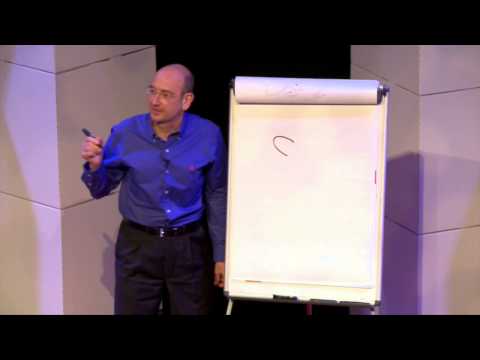
Your elusive creative genius
Summary
Elizabeth Gilbert opens with the strange problem that followed the massive success of her book “Eat, Pray, Love.” Everyone, she says, now treats her like she’s doomed, constantly asking if she’s afraid she’ll never be able to top it.
She connects this fear of repeating success to the fear every creator has of initial failure, asking why we seem to think creativity and suffering are inherently linked. Gilbert points out we don’t worry about “chemical-engineering block,” but we’ve accepted that artists are destined for anguish.
She argues this is a toxic idea, and a relatively new one. For a solution, she looks to ancient Greece and Rome, where people believed creativity didn't come from humans, but *through* them. Creativity was a “daemon” or a “genius,” a divine spirit external to the artist. This created a healthy psychological distance; if your work bombed, it was because your genius was lame.
The Renaissance changed this, she says, by placing the human at the center of everything. The artist stopped *having* a genius and started *being* one, a burden she calls “a smidge too much responsibility for one fragile, human psyche.”
To bring this ancient idea into the present, she tells a story about the musician Tom Waits. When a melody hits him while he’s driving, he simply looks to the sky and says, “Excuse me, can you not see that I’m driving? Go bother Leonard Cohen.”
Gilbert’s conclusion is that we must separate ourselves from our work in this way. Your only job is to show up and do your part. If some magic comes through, great. If not, do your work anyway. For the sheer stubbornness of showing up, she says, you deserve an “Olé!”
Why this talk worked
The hook
Elizabeth Gilbert starts not with a boast about her runaway bestseller, but with a confession of its terrifying aftermath. She tells us that everywhere she goes, people treat her like she’s “doomed,” destined to never again write a book anyone cares about. It’s a brilliantly disarming move.
Instead of positioning herself as an expert on a pedestal, she presents a problem that is both highly specific to her and yet deeply relatable. She immediately connects the fear of having to top a massive success with the fear of ever having success in the first place, the kind that ends in a “scrap heap of broken dreams.” This brings everyone in the room, from the globally famous to the quietly aspiring, onto the same emotional ground in under two minutes.
Why it resonates
This talk lands because it addresses the universal anxiety of creation. Nearly everyone has stared at a blank screen or a project at work and felt the quiet dread of inadequacy. Gilbert takes that private, isolating feeling and reframes it as a shared cultural inheritance.
Her central question, “are you guys all cool with that idea?” that creativity must lead to anguish, gives the audience permission to reject a narrative they likely never realized they’d accepted. She’s not offering simple productivity hacks. She’s diagnosing a 500-year-old historical error and offering a way to correct it in our own minds.
By externalizing the source of creative pressure, she externalizes the blame. The problem isn’t that you’re not good enough; it’s that you’ve been asked to “swallow the sun” by a culture that conflates the creator with the act of creation. It’s a profoundly validating and liberating message.
How it is built
Gilbert constructs her argument with the elegant precision of a classical essay. It moves from a personal problem to a historical diagnosis, then to a proposed solution supported by memorable parables, and ends with a personal, actionable takeaway.
First, she establishes the tension: the twin fears of failure and success. Then comes the turn, where she pivots from her own anxiety to a sweeping historical argument. The Renaissance, she posits, is the villain, collapsing the distance between the artist and their inspiration by making the person *be* the genius, rather than *have* a genius.
This historical idea could feel academic, but she makes it concrete and human with two perfectly chosen stories. The poet Ruth Stone, who describes poems chasing her across a field “like a thunderous train of air,” gives the idea a mystical, almost primal feeling. Then the musician Tom Waits, telling his muse to go bother Leonard Cohen, makes it pragmatic, modern, and funny.
The structure lands with a beautiful resolution. Gilbert brings the grand concept back to herself, telling us how she spoke to an empty corner of the room while writing her book. She concludes with the story of “Olé,” tracing its roots to the word “Allah” as a recognition of the divine passing through a performer. This final image perfectly fuses the historical, the personal, and the spiritual, giving the audience a single word to carry away with them.
The delivery
Gilbert’s style is warm, conspiratorial, and utterly devoid of polish, which is precisely why it works so well. She feels less like a lecturer and more like a friend who’s had a breakthrough and can’t wait to tell you about it. Her pace is unhurried, her gestures are natural, and her humor is dry and self-deprecating.
When she delivers lines like the one about her dad, a chemical engineer, never being asked about his “chemical-engineering block,” the timing is impeccable. She lets the audience laugh, a shared moment of recognition that a truth has been spoken plainly. She doesn’t perform her vulnerability; she simply is vulnerable.
There's an earnestness to her delivery that makes the more mystical ideas feel plausible. When she tells the Tom Waits story, she embodies his exasperation. When she tells her own, you believe her desperation. She’s not selling an idea so much as sharing a tool that saved her, and that authenticity is what makes the audience lean in and listen.
Why it spreads
This talk is built to travel. It offers a single, powerful, and easily repeatable idea: separate the creator from the creative act. The distinction between being a genius and having a genius is a sticky concept that gives people an immediate tool to manage their own anxiety.
More than anything, it’s the stories that make it shareable. The image of Tom Waits talking to the sky is unforgettable, a perfect little parable of creative sanity. “Go bother Leonard Cohen” is an all-time great line, shorthand for the entire talk’s philosophy. It’s the kind of anecdote people retell constantly.
The final frame of “Olé!” gives the talk an uplifting, almost spiritual conclusion. It’s a blessing, a mantra people can offer to themselves and others. You don’t share this talk because it's a productivity tip. You share it because it feels like an act of kindness. You send it to a friend who is struggling, to a colleague on a deadline, or to anyone who needs permission to just show up and do their work, regardless of the outcome.
Want your talk to land like this?
We help TEDx speakers get their talks in front of the audience they deserve. A 15-minute call is all it takes.
Book your free 15-min call