Inside the Mind of a Master Procrastinator
Summary
The speaker begins with a deeply relatable and humorous account of his own history as a master procrastinator, culminating in the story of writing his 90-page senior thesis in a frantic 72-hour period. He then reveals, with self-deprecating wit, that the result was a “very, very bad thesis.” This personal failure serves as the entry point to his core idea: exploring what goes on inside the procrastinator’s mind. He proposes that the procrastinator's brain contains not just a Rational Decision-Maker, like everyone else, but also an “Instant Gratification Monkey” who constantly hijacks the controls.
This Monkey steers the brain towards easy and fun distractions, like falling into a YouTube spiral about Justin Bieber’s mom, leading the procrastinator into what the speaker calls the “Dark Playground,” a place where leisure is tainted with guilt, anxiety, and dread. The only thing that can scare the Monkey away is the last-minute arrival of the “Panic Monster,” which wakes up when deadlines loom, forcing a burst of focused work. However, the talk takes a serious turn, revealing that this system only functions for tasks with deadlines. The speaker introduces a second, more insidious type of procrastination that occurs with life’s most important, non-deadline-driven goals, such as starting a business, nurturing relationships, or caring for one’s health. In these areas, the Panic Monster never appears, leading to a quiet, long-term suffering that can make people feel like spectators in their own lives. The talk concludes with a stark visual of a “Life Calendar,” representing the weeks in a 90-year life, urging the audience to confront what they are truly procrastinating on.
Why this talk worked
The hook
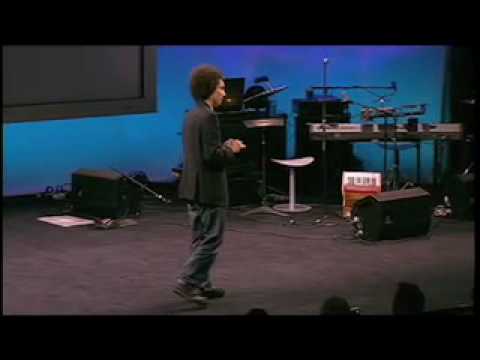
The talk’s opening is a masterclass in earning audience trust through vulnerability and humor. Instead of starting with a bold claim or a statistic, the speaker begins with a personal, relatable confession: he was a government major who was terrible at writing papers. He uses a simple, low-fi visual of two graphs, one showing a “normal” student’s workflow and the other his own, a cliff of last-minute panic. This immediately establishes the central conflict in a visual and universally understood way. The story then escalates to his 90-page senior thesis, a high-stakes scenario. The hook’s brilliance lies in its comedic reversal. After describing his superhuman 72-hour writing marathon, he sets up a moment of triumph, claiming the school called to say, “It’s the best one we’ve ever seen.” He pauses for the laughter and applause before completely pulling the rug out with, “That did not happen… It was a very, very bad thesis.” This act of self-deprecation does two crucial things: it generates a huge laugh, and it instantly transforms him from a potential guru into a fellow human. The audience is not being lectured, they are being invited into a shared struggle by someone who is not afraid to look foolish.
Why it resonates
Procrastination is a nearly universal experience, but the talk resonates so deeply because of its central framing device. It externalizes a deeply personal and often shameful internal struggle. By giving the warring factions in our heads names and personalities, the Rational Decision-Maker and the Instant Gratification Monkey, the speaker performs a powerful act of reframing. The problem is no longer a personal failing of being “lazy” or “undisciplined.” It is an understandable conflict between two distinct parts of our brain. This model is both forgiving and empowering. Furthermore, the talk gives a name to a very specific and painful emotional state: the Dark Playground. The description of this place, where “the air is filled with guilt, dread, anxiety, self-hatred,” creates a profound moment of recognition. It validates a feeling that many people suffer quietly, believing they are alone in experiencing it. The talk says, in effect, that this strange, joyless form of “fun” is a core part of the procrastinator’s experience. This validation makes people feel seen and understood on a fundamental level.
How it is built
The talk is structured as a compelling narrative with a deliberate and powerful turn. The first two-thirds of the talk are dedicated to building a charming, funny, and seemingly complete model of the procrastinator’s system.
- •The Setup: We are introduced to the core characters: the well-meaning Rational Decision-Maker, the impulsive Monkey, and the fearsome Panic Monster. The speaker illustrates their interactions with funny, hyper-specific examples, like reading the “Nancy Kerrigan/Tonya Harding scandal” Wikipedia page. He concludes this section by stating that this system, while not pretty, “in the end, it works.” This leaves the audience with a satisfying, if slightly dysfunctional, explanation for their behavior.
- •The Turn: The entire narrative pivots when the speaker mentions the thousands of emails he received in response to his blog post. He contrasts the “light tone of the post” with the “heaviness of these emails.” This is the moment the talk moves from a humorous analysis of a quirk to a serious examination of a source of deep unhappiness. It raises the stakes from finishing a paper to living a fulfilling life.
- •The Payoff: The speaker reveals his true thesis: there are two kinds of procrastination. The deadline-driven type is managed by the Panic Monster, but the second type, for crucial life goals without deadlines, has no such safety net. This is the talk’s core insight. The system he so carefully built is suddenly revealed as a trap that fails us where it matters most, in our careers, relationships, and health. This structure takes the audience on a journey from comfortable laughter to uncomfortable, but vital, self-reflection.
The delivery
The speaker's delivery is central to the talk’s success. His style is intentionally unpolished and conversational, which makes his ideas feel more authentic and accessible. He uses phrases like “a writer-blogger guy” to position himself not as an authority figure, but as a curious peer. This humility is disarming.
His comedic timing is impeccable. The long pause before revealing his thesis was terrible is a perfect example, as he allows the audience to fully invest in the heroic fantasy before puncturing it. This creates a powerful shared experience. His use of simple, hand-drawn-style visuals of stick figures and rudimentary brains complements his persona. The graphics are not slick or corporate, they feel personal and genuine, as if pulled directly from his notebook. This visual style makes the abstract concepts of the Rational Decision-Maker and the Instant Gratification Monkey feel concrete and easy to grasp. When the Monkey is shown literally taking the wheel of the brain, the metaphor becomes an unforgettable image.
Why it spreads
The talk is engineered for memorability and transmission. Its power to spread comes from three key elements:
- •Portable Vocabulary: The talk’s greatest asset is the set of sticky, shareable terms it introduces. Instant Gratification Monkey, Dark Playground, and Panic Monster are not just concepts, they are a new language. They are easy to remember, easy to explain, and perfectly capture complex internal states. People share the talk because it gives them a simple, effective shorthand to explain their own behavior to themselves and others. It is a powerful social tool.
- •The Powerful Reframe: The distinction between deadline and non-deadline procrastination is a genuine epiphany for many viewers. It provides a clear and compelling answer to the question, “Why can I pull an all-nighter for a work project but can’t spend one hour on my own dream project?” This “aha” moment is the core value people want to share with others. It feels like a secret has been unlocked, a key insight into a frustrating part of life.
- •The Final Image: The talk concludes with the stark, unforgettable image of the Life Calendar, showing a 90-year life as a finite grid of weekly boxes. This visual is a quiet, profound call to action. It is not preachy, but it creates a palpable sense of urgency. The simple statement, “That’s not that many boxes,” lands with incredible weight. This final image is easily screenshotted, remembered, and shared, serving as a powerful, motivating reminder of the talk's ultimate message about the preciousness of time.
Want your talk to land like this?
We help TEDx speakers get their talks in front of the audience they deserve. A 15-minute call is all it takes.
Book your free 15-min call